
Pixelated Worlds: The Comeback
Pixel art is making a strong comeback in gaming, with titles using this style frequently hitting Steam's top charts. This shows a demand that goes beyond just nostalgia. After 3D graphics had their time, pixel art is now a key feature for many successful indie games.
Pixel art faded in the late 1990s and early 2000s as graphics became more realistic. With hardware no longer a limit, developers focused on visual fidelity. But this push for realism eventually made people want something else. Now, players and developers are rediscovering pixel art's charm and artistic value.
This isn't just a retro fad; it's a deliberate artistic choice. Developers are picking pixel art for its unique qualities, and players are noticing. The style provides a distinct look, a feeling of handcrafted detail, and a link to gaming's past, and it's proving to be a successful aesthetic on its own.
Steam's Top Performers: A Pixelated Breakdown
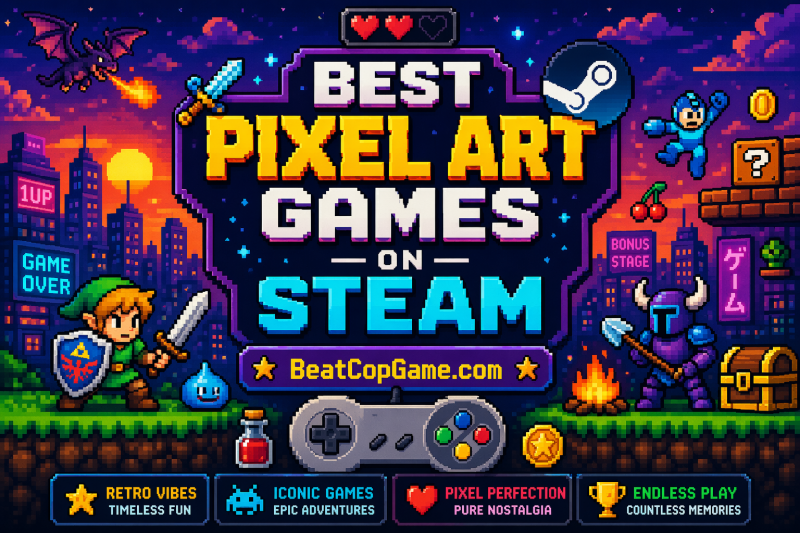
Pixel art games are doing well on Steam. Balatro, released in February 2024, was a huge success, selling over 500,000 copies in its first month, according to SteamDB. Its simple, addictive gameplay and striking pixel art really connected with players.
Take Pizza Tower, released in 2023. This fast-paced platformer, inspired by Wario Land, got overwhelmingly positive reviews and sold over 300,000 copies. Its energetic animation and detailed pixel art environments were often praised. Other games like Chants of Sennaar and Dredge have also been very successful.
These games share more than just the art style; it's how the style works with the gameplay. Balatro's simple pixel art keeps the focus on the card mechanics, while Pizza Tower uses its bright visuals to boost the chaotic energy. Dredge builds a feeling of isolation and mystery with its detailed pixel world. The art style is a core part of the experience, not just decoration.
Critics often praise the art direction, but player numbers show a broader appeal. Many of these games have large numbers of players at the same time, showing pixel art isn't just for a small group. The mix of fun gameplay, strong art, and a nostalgic feel is a successful combination.
Asset Demand: What Developers Need
Pixel art games' success has naturally increased demand for related assets. Independent developers, especially, are looking for pre-made sprites, icons, tilesets, and UI elements. Platforms like itch.io offer many asset packs, often for free or at a low cost.
itch.io's 'Icons' and 'Pixel Art' sections have diverse offerings, from simple icon sets to full character sprites. CraftPix.net also has many pixel art assets, like game kits and themed tilesets. Prices vary, with icon sets starting around $5 and larger packs going for over $50.
Whether to buy assets or make them in-house usually depends on time and budget. Making good pixel art takes skill and effort. For solo developers or small teams, buying assets can speed up development a lot. Still, many developers prefer to create their own assets to keep a unique look.
- Pixel Art Icons: Essential for UI and gameplay clarity.
- Character Sprites: The foundation of any 2D game.
- Tilesets: Used to build environments and levels.
- UI Elements: Buttons, menus, and other interface components.
Essential Tools for Mastering Pixel Art Game Icons

Professional-grade pressure-sensitive pen input · Compact and portable design · Renewed condition with extended protection plan
This renewed Wacom Intuos Pro tablet offers professional-grade precision for detailed pixel art creation at a reduced cost, bundled with protection for long-term use.

Large 11x6 inch drawing area · Battery-free stylus with tilt function · Broad compatibility with Windows, macOS, and ChromeOS
The XP-PEN Deco Pro provides an expansive and responsive drawing surface with a versatile stylus, making it suitable for detailed pixel art work across multiple operating systems.
Dedicated pixel-based drawing and animation tools · Layer support for complex designs · Sprite sheet export functionality
Aseprite is the industry-standard software for pixel art creation, offering specialized tools essential for developing authentic retro game assets efficiently.

Grid-lined pages for precise pixel placement · Ample space for sketching and ideation · Durable paperback binding
This sketchbook provides a tactile and accessible medium for practicing pixel art fundamentals, allowing developers to quickly prototype and refine character and environment designs.

Comprehensive guide to pixel art techniques · Focus on game development applications · Covers color theory and animation principles
This educational resource offers in-depth knowledge and practical strategies specifically tailored for creating compelling pixel art within the context of modern game development.
As an Amazon Associate I earn from qualifying purchases. Prices may vary.
The Indie Advantage: Lower Barriers
Pixel art makes it much easier for indie game developers to start. Making detailed 3D models and textures needs special skills and lots of resources. Pixel art, while still needing artistic talent, is usually faster and cheaper to make. This lets smaller teams put their limited resources into gameplay, design, and new ideas.
A solo developer can make a good-looking pixel art game with much less effort than a 3D title. This is especially important for projects with little funding or small teams. Pixel art tools are easy to access, and many online tutorials help too. It's a practical way for people to make their game ideas real.
But the appeal isn't just about money. Many developers choose pixel art as a clear artistic statement, valuing its unique look and connection to gaming history. The style can give a game a distinct personality and charm that's hard to get with other art styles.
Beyond Nostalgia: A Distinct Aesthetic
Nostalgia is part of it, but pixel art's popularity goes way beyond just looking like old games. The style has unique visual qualities that many people like. Pixel art's deliberate limits – low resolution, limited colors – make artists be creative and focus on clarity and impact.
This limitation creates a distinct look that highlights shape, color, and composition. Pixel art's simplicity can be very charming and expressive. Unlike the photorealism of modern 3D graphics, pixel art is a refreshing alternative that favors artistry over technical detail. It's a choice, not a compromise.
Consider the difference between a highly detailed 3D character model and a well-crafted pixel art sprite. The sprite, despite its limited resolution, can convey just as much personality and emotion through careful animation and design. Pixel art encourages players to fill in the gaps with their imagination, creating a more engaging and immersive experience. It’s a valid and expressive art form in its own right.
Tools of the Trade: Software & Techniques
Several software packages cater specifically to pixel art creation. Aseprite is arguably the industry standard, offering a comprehensive set of tools for sprite creation, animation, and tilemap editing. Photoshop, while not specifically designed for pixel art, can also be used effectively with the right techniques and brushes.
GraphicsGale is another popular option, particularly among artists who prefer a more traditional approach. Piskel is a free, browser-based pixel art editor that’s ideal for beginners. Each tool has its strengths and weaknesses, but they all share a common goal: to facilitate the creation of high-quality pixel art.
Common pixel art techniques include dithering (using patterns of pixels to simulate shades of gray), anti-aliasing (smoothing jagged edges), and the careful selection of color palettes. Mastering these techniques requires practice and experimentation, but they are essential for creating visually appealing and effective pixel art.
Icon Design: Small Details, Big Impact
In pixel art games, well-designed icons are crucial for communicating information to the player. These small visual cues guide players through the user interface, indicate available actions, and represent in-game items. Clarity and readability are paramount, even at small resolutions. An ambiguous or poorly designed icon can lead to confusion and frustration.
Effective icon design prioritizes simplicity and recognizability. Using clear shapes and contrasting colors helps icons stand out against the background. Avoiding excessive detail ensures that the icon remains legible even when scaled down. Consider the context in which the icon will be used and design it accordingly.
For example, an icon representing a health potion should instantly convey the idea of healing. A simple red heart or a stylized flask is more effective than a complex illustration. Conversely, an ineffective icon might be too abstract or too similar to other icons, leading to misinterpretation. The impact of good icon design is often underestimated, but it significantly enhances the user experience.
Future Trends: What's Next for Pixel Art?
The future of pixel art in gaming appears bright. I anticipate continued growth in its popularity, driven by the ongoing success of indie titles and a growing appreciation for its unique aesthetic. We're likely to see further experimentation with new techniques and styles, pushing the boundaries of what’s possible within the medium.
One potential trend is the integration of pixel art with more advanced rendering techniques. For example, we might see pixel art games incorporating dynamic lighting or particle effects to create a more immersive experience. The combination of retro aesthetics with modern technology could yield some truly stunning results.
Another possibility is a blurring of the lines between pixel art and other art forms. We might see developers experimenting with hybrid styles that blend pixel art with 3D elements or vector graphics. The key will be to maintain the charm and character of pixel art while leveraging the strengths of other techniques. It’s difficult to predict precisely what the future holds, but pixel art’s resurgence demonstrates its enduring appeal and its potential for continued innovation.
Do you think pixel art's popularity in game development will continue to grow over the next 5 years?
The data from Steam's 2026 top charts suggests pixel art icons and retro-styled assets are experiencing a significant resurgence. As developers and designers working with game graphics, your perspective matters. Vote below and share your analysis in the comments.


No comments yet. Be the first to share your thoughts!