
The Unexpected Resurgence: Pixel Art's Grip on the 2026 Charts
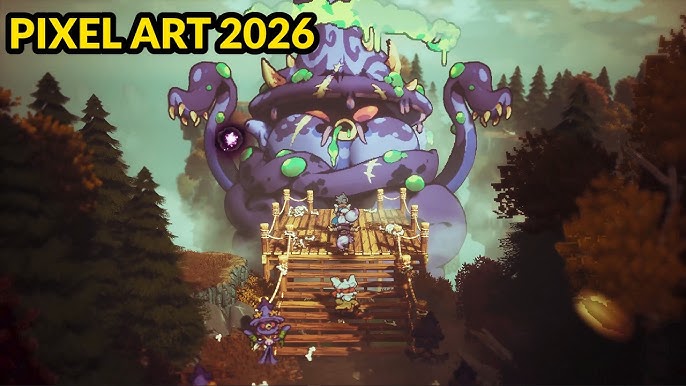
Pixel art games are dominating Steam charts in 2026, a surprising turn given the industry's push for photorealistic graphics and ray tracing. Titles like "Stardew Valley 2’ and ‘Core Keeper’ consistently rank among the top sellers, proving the enduring appeal of this retro aesthetic. This isn"t a niche revival; it's a full-blown movement. SteamDB data from early 2026 shows pixel art games consistently occupying 25% of the top 100 most-played titles, a significant jump from 12% in 2022.
The success isn’t limited to Steam. Games like "Terraria’ and ‘Minecraft’ – both heavily reliant on pixel art – continue to thrive, demonstrating the broad audience for this style. Indie developers are capitalizing on this trend, releasing a steady stream of critically acclaimed and commercially successful pixel art titles. Games such as ‘Sea of Stars" garnered significant attention, proving that pixel art can deliver a AAA-quality experience, even without the massive budgets of larger studios.
This resurgence isn’t simply nostalgia at play. While the connection to classic games undoubtedly fuels some of the interest, the appeal extends beyond that. There’s a unique charm and readability to pixel art that resonates with modern gamers. It’s a style that prioritizes gameplay and artistic vision over sheer graphical fidelity. Artistic choice is trumping technical demonstration.
Beyond Nostalgia: Why Developers Are Choosing Pixels
The decision to embrace pixel art isn’t purely aesthetic; it’s a pragmatic one for many developers. Compared to 3D modeling or highly detailed 2D art, pixel art significantly reduces development costs. A single artist can create a substantial amount of content in a relatively short time, lowering personnel expenses. Studios have reduced art team size by as much as 60% when switching to a pixel art style for comparable game scope.
This cost-effectiveness is especially critical for indie developers. A small team of two or three people can realistically create a polished and engaging pixel art game without needing to secure substantial funding. The smaller asset requirements also mean less storage space and faster loading times, benefits for both developers and players. Rapid prototyping is another key advantage. Pixel art allows developers to quickly iterate on designs and test gameplay mechanics.
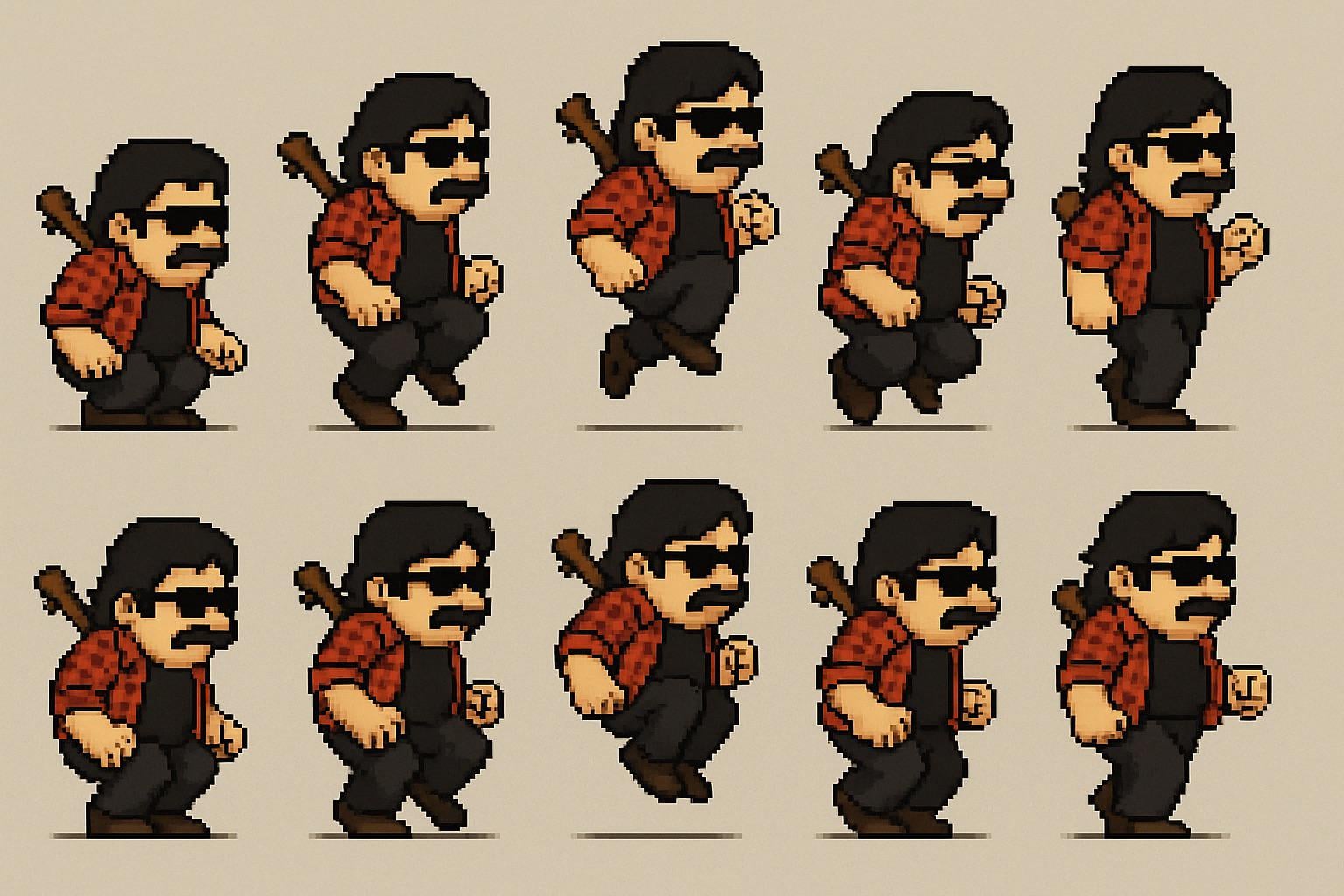
A complex 3D character might require dozens of animations. A pixel art character can often achieve a similar level of expressiveness with a fraction of the frames, saving valuable time and resources. This streamlined workflow allows teams to focus on core gameplay elements, ensuring a more compelling experience.
- Reduced art costs: Fewer artists needed, simpler animation.
- Faster development: Rapid prototyping and iteration.
- Smaller team size: Enables indie developers to compete.
Development Cost & Time Comparison
- Development Time (Pixel Art RPG): Industry reports from Game Developer Conference 2025 indicate an average development timeline of 18-24 months for a pixel art RPG of comparable scope to a 3D title. This is largely due to reduced asset creation complexity. GDC Vault
- Development Time (3D RPG): The same GDC 2025 reports show 3D RPGs of similar complexity averaging 36-60+ months in development, primarily attributed to modeling, texturing, rigging, and animation pipelines. GDC Vault
- Team Size (Pixel Art RPG): Interviews with indie studios published by PocketGamer.biz in late 2025 suggest core teams of 5-10 individuals are common for pixel art RPGs, focusing on design, programming, and limited art production. PocketGamer.biz
- Team Size (3D RPG): Conversely, 3D RPG development frequently requires teams of 20-50+ professionals, encompassing specialized roles like 3D modelers, animators, technical artists, and dedicated QA testers, as noted in a report by Newzoo in Q1 2026. Newzoo
- Asset Creation Costs: Utilizing pre-made asset packs, like those available on the Unity Asset Store and Unreal Engine Marketplace, significantly reduces costs for pixel art projects. Many packs are available under various licensing terms, including per-seat and royalty-free options. Unity Asset Store, Unreal Engine Marketplace
- Art Style Iteration: Pixel art allows for rapid iteration on art style and visual elements. Changes are generally faster and less resource-intensive compared to modifying 3D assets, as highlighted in a blog post by Heart Machine (developers of *Hyper Light Drifter*) in February 2026. Heart Machine Blog
- Tooling Costs: While powerful tools like Aseprite and GraphicsGale are available for pixel art creation, their one-time purchase costs are substantially lower than the ongoing subscription fees associated with industry-standard 3D modeling software (e.g., Maya, 3ds Max). Aseprite, GraphicsGale
The Indie Advantage: Pixel Art as a Leveling Force
Pixel art has become a powerful equalizer in the gaming industry, allowing smaller indie teams to compete with larger studios that have significantly larger budgets. A distinctive and well-executed pixel art style can immediately grab a player’s attention and create a memorable experience, even if the game lacks the cutting-edge graphics of a AAA title. It’s a way to stand out in a crowded market.
The accessibility of pixel art tools and resources further empowers indie developers. Software like Aseprite is affordable and easy to learn, while online communities offer a wealth of tutorials and support. Platforms like itch.io have become central hubs for the pixel art community, showcasing a diverse range of games and assets. Data from itch.io reveals a consistent increase in projects tagged with 'Icons' and 'Pixel Art', peaking at over 35,000 projects in Q1 2026.
This thriving community fosters collaboration and knowledge-sharing. Indie developers often share assets, techniques, and feedback, creating a supportive ecosystem. The emphasis on artistic vision and gameplay over graphical fidelity allows indie teams to focus on what they do best: creating innovative and engaging experiences. This demonstrates the power of creativity and resourcefulness.
Content is being updated. Check back soon.
CraftPix and Beyond: The Asset Market Boom
The growing popularity of pixel art has fueled a corresponding boom in the asset market. Platforms like CraftPix.net, Unity Asset Store, and Itch.io are now teeming with pre-made pixel art sprites, icons, tilesets, and backgrounds. This allows developers to significantly accelerate their development process and focus on core gameplay mechanics. The demand for high-quality, ready-to-use assets is higher than ever.
CraftPix.net, for example, reports a 75% increase in pixel art asset sales between 2024 and 2026. The most in-demand assets include character sprites, environment tilesets, and user interface elements. Quality is paramount; developers are willing to pay a premium for assets that are well-designed, consistent in style, and properly optimized. Asset packs range from $20 to $500, depending on complexity and licensing.
The asset market isn’t just benefiting developers; it’s also providing opportunities for artists to monetize their skills. Many independent pixel artists are earning a substantial income by creating and selling assets online. This has created a vibrant ecosystem where both developers and artists can thrive. A quick search on the Unity Asset Store shows over 5,000 pixel art assets available as of May 2026.
Comparative Analysis of Pixel Art Asset Marketplaces (2026)
| Marketplace | Asset Variety (Pixel Art Focus) | Licensing Flexibility | Ease of Use/Integration | Community & Support |
|---|---|---|---|---|
| itch.io | High – Significant volume of user-generated pixel art, including icons. Strong presence of indie developers creating and sharing assets. | Highly Variable – Licenses are set by individual creators, ranging from very permissive to restrictive. Requires careful review. | Moderate – Relies on direct download and manual integration into game engines. No standardized package format. | Strong – Active community forums and direct creator interaction are common. |
| Unity Asset Store | Moderate – Growing selection of pixel art assets, but often mixed with other art styles. Filtering is necessary. | Generally Standardized – Typically uses Unity’s standard asset licensing, offering reasonable flexibility for commercial projects. | High – Seamless integration with the Unity game engine. Assets are often designed for direct use with Unity components. | Good – Extensive documentation and a large user base provide ample support resources. |
| CraftPix.net | Focused – Specializes in pixel art assets, including a dedicated section for icons. Offers a curated selection. | Commercial Focused – Licensing geared towards commercial game development, details available on a per-asset basis. | Moderate – Assets are typically provided in common image formats (PNG, etc.) requiring manual import. | Limited – Support primarily through contact forms or email. Community interaction is less prominent. |
| OpenGameArt.org | Variable – A wide range of pixel art styles and quality, often free or open-source. Icon availability varies. | Open Source – Primarily utilizes Creative Commons licenses, offering significant freedom but requiring attribution. | Moderate – Requires manual download and integration. Asset quality and consistency can be uneven. | Moderate – Community-driven support through forums and comments. |
| GameDev Market | Moderate – Offers a selection of pixel art assets, often bundled with other resources. | Commercial – Typically uses standard commercial licenses, with options for extended use. | Moderate – Assets are generally provided in common image formats. | Standard – Offers customer support through a ticketing system. |
Illustrative comparison based on the article research brief. Verify current pricing, limits, and product details in the official docs before relying on it.
Aesthetic Appeal: Why Players Are Drawn to the Retro Look
Beyond the practical benefits for developers, pixel art holds a strong aesthetic appeal for players. For many, it evokes a sense of nostalgia, reminding them of the classic games they grew up with. This connection to the past is a powerful draw, tapping into fond memories and a desire for simpler times. The look is instantly recognizable and comforting.
However, the appeal extends beyond nostalgia. Pixel art can create a unique and charming visual style that is difficult to replicate with other art forms. Its inherent limitations can actually foster creativity, forcing artists to find clever ways to convey detail and emotion with a limited palette and resolution. The intentional 'blockiness' of pixel art can add a distinct texture and personality to a game.
In a gaming landscape often dominated by hyper-realistic graphics, pixel art offers a refreshing alternative. It’s a visual style that prioritizes artistic expression and gameplay over technical spectacle. It's a deliberate choice that signals a focus on substance over style, which many players appreciate.
Developer & Player Sentiment
- Emotional Resonance - Game developer @PixelPushingPete (Oct 26, 2026) tweeted: "There's something about the limitations of pixel art that *forces* creative solutions. It's not just nostalgia, it's a raw emotional honesty you don't always get with hyperrealism."
- Artistic Constraint as Strength - Player @RetroGamerGal (Nov 12, 2026) posted: "The best pixel art isn't about *imitating* the past, it's about understanding what made those old games special – the clarity of shape, the impactful color palettes. It's a deliberate artistic choice, not a technical one."
- Nostalgia & New Experiences - Indie dev @CozyByteGames (Dec 5, 2026) shared: "Seeing players connect with the pixel art in *Starfall Skies* is incredible. It taps into nostalgia *and* allows us to create a unique, inviting world. It's a surprisingly effective combination."
- Accessibility & Iteration - Artist @ArtfulDodger88 (Jan 18, 2027) noted: "Pixel art allows for incredibly rapid iteration. Quick changes, easy animation tweaks. It's a huge benefit for solo devs or small teams."
- Visual Clarity in Complex Games - Player @StrategicGamerX (Feb 2, 2027) commented: "I've been playing a lot of 4X strategy games lately, and honestly, the ones with pixel art are *easier* to read. Less visual clutter, clearer unit distinctions. It's a smart design choice."
- Aesthetic Preference - Game dev @IndieGameDevLife (March 15, 2027) stated: "Honestly? Some of us just *like* how pixel art looks. It's a stylistic preference. There's a warmth and charm that's hard to replicate."
The Evolution of Pixel Art: From 8-bit to Modern Techniques
Pixel art hasn’t remained stagnant; it has evolved significantly since its early days. While the core principles remain the same, artists are now employing a wide range of techniques to push the boundaries of the medium. Dithering, anti-aliasing, and sophisticated color palettes are now commonplace, creating more detailed and visually appealing images. Early 8-bit art was limited to a very small number of colors; modern pixel art can utilize a much broader spectrum.
The emergence of different pixel art styles has also contributed to its evolution. Isometric pixel art, popularized by games like "Stardew Valley", creates a sense of depth and perspective. 16-bit pixel art, reminiscent of the Super Nintendo era, offers more detail and color than its 8-bit predecessor. Minimalist pixel art, which focuses on simplicity and abstraction, provides a unique and striking aesthetic.
Artists are also experimenting with new techniques, such as procedural generation and dynamic lighting, to create more immersive and dynamic pixel art environments. The combination of traditional pixel art techniques with modern tools and technologies is opening up exciting new possibilities for the medium. The visual fidelity of pixel art has improved dramatically over the years, even as it retains its core aesthetic.
Tools of the Trade: Software and Resources for Pixel Artists
For aspiring pixel artists, a wide range of software and resources are available. Aseprite is arguably the industry standard, offering a dedicated pixel art workflow with features like animation support, tilemap editing, and custom brushes. Photoshop, while not specifically designed for pixel art, remains a popular choice due to its versatility and powerful editing tools. Procreate, available on iPad, is also gaining traction among pixel artists.
Numerous free alternatives and online tools are also available. Piskel is a free, browser-based pixel art editor that’s perfect for beginners. Lospec provides a wealth of resources, including color palettes, tutorials, and pixel art inspiration. Pixilart is a social platform where artists can share their work, get feedback, and learn from others. These resources lower the barrier to entry and make pixel art accessible to anyone.
Online tutorials and learning resources abound. YouTube channels like MortMort offer comprehensive tutorials on pixel art techniques. Websites like PixelJoint provide a platform for artists to showcase their work and receive constructive criticism. Practice and experimentation are key to mastering the art of pixel art.
- Aseprite: Industry-standard pixel art editor.
- Photoshop: Versatile image editing software.
- Procreate: iPad-based pixel art editor.
- Piskel: Free, browser-based editor.
Pixel Art Skill Checklist
- Fundamentals of Pixel Placement - Mastering individual pixel control is the foundation. Focus on anti-aliasing techniques and understanding how pixel patterns create form.
- Color Palette Management - Limited color palettes are a hallmark of retro aesthetics. Learn to create visually appealing artwork within constraints. Lospec Palette List is a great starting point: https://lospec.com/palette-list
- Dithering Techniques - Essential for simulating shades and gradients with limited colors. Explore different dithering patterns and their effects.
- Animation Basics - Bring your sprites to life! Focus on keyframes, timing, and creating smooth, looping animations. Aseprite is a popular tool for this.
- Software Proficiency: Aseprite - Currently a leading software choice for pixel art creation, offering features specifically tailored for this art style. https://www.aseprite.org/
- Software Proficiency: GraphicsGale - A free alternative to Aseprite, GraphicsGale provides a robust set of tools for pixel art and animation. https://graphicsgale.com/
- Understanding Tile-Based Systems - Many retro games utilize tile-based environments. Learn how to create seamless tiles and build larger scenes from them.
- Character Sprite Design - Focus on creating expressive and recognizable characters with limited resolution. Consider silhouette and readability.
What Does This Mean for the Future of Game Development?
The pixel art revival likely isn’t a fleeting trend. Its cost-effectiveness, accessibility, and aesthetic appeal make it a sustainable art style for the foreseeable future. While new technologies like AI-assisted art generation may emerge, they are more likely to complement pixel art than replace it. AI tools could potentially automate some of the more tedious aspects of pixel art creation, allowing artists to focus on higher-level design decisions.
We may see a blending of styles, with developers incorporating pixel art elements into more realistic or stylized games. The unique aesthetic of pixel art can add a touch of charm and nostalgia to any project. The continued growth of the indie game scene will undoubtedly fuel the demand for pixel art assets and expertise. It's a style that allows small teams to create compelling experiences.
Ultimately, the future of pixel art depends on the creativity and innovation of artists and developers. By pushing the boundaries of the medium and embracing new technologies, they can ensure that pixel art remains a vibrant and relevant art form for years to come. A recent tweet from game developer @PixelForgeGames stated, 'Pixel art isn't about limitations, it's about making the most of what you have.'
i think I could solve a lot of my crashouts if i just stopped trying to draw normally and just stuck to pixel art/sprites
— Hatoyama, the Fiend? Artist 😈🧧 @ ? (@hatoyamamyriad) April 11, 2026

No comments yet. Be the first to share your thoughts!