
The shift toward mobile sprites
Mobile graphics are moving away from photorealism. It is a choice driven by hardware reality. Processing power and battery life vary wildly across devices, so stylized art scales better than heavy assets. A high-poly 3D model might look great on a new iPhone, but it kills performance on a three-year-old Android. 2D sprites stay consistent across the board.
Character sprites are central to this approach. They’re relatively lightweight, easy to animate, and lend themselves well to a variety of art styles. We’ve seen an evolution, of course, from the early days of pixel art to more detailed 2D sprites with hand-painted textures and complex shading. But the core principle remains: prioritize visual clarity and performance over raw graphical fidelity.
Mobile’s constraints haven't limited artistic expression; they’ve shaped it. Developers have become incredibly adept at creating visually appealing games that run smoothly on a diverse range of devices. This has led to a unique aesthetic that prioritizes character and charm over hyper-realism. The focus is on conveying information quickly and efficiently, and sprites excel at that. It's about smart design, not just pushing polygons.
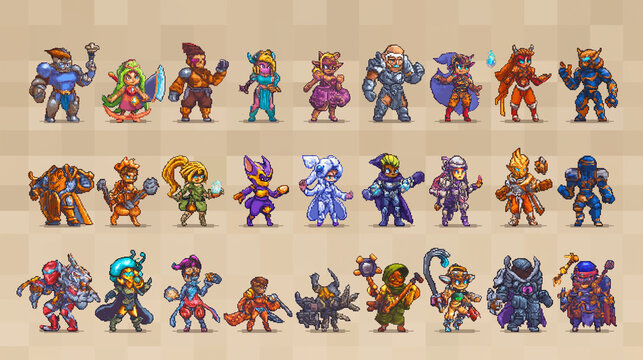
Why low-poly works
Low-poly sprites are everywhere, and they are staying. They keep file sizes small and performance high. Since these models use fewer polygons, they don't eat up device resources. This matters for mobile games where every megabyte of RAM counts.
What’s interesting is how developers are pushing the boundaries of low-poly. Clever texturing and lighting techniques can create a surprising amount of depth and detail, even with a limited polygon count. We’re seeing more experimentation with gradients, ambient occlusion, and subtle shading to give low-poly sprites a more polished look. I suspect we'll see a surge in 'hyper-low poly' styles, almost entirely abstract in shape.
Tools like Aseprite are ideal for creating pixel-perfect low-poly sprites, while Photoshop and Blender offer more advanced options for modeling and texturing. The ease of iteration is another major advantage. Making changes to a low-poly model is significantly faster than revising a high-resolution one. This allows for rapid prototyping and experimentation.
Let's get back to @campnetworkxyz and it's newest updates⛺️
— Shuarix™ (@Shuarix) July 25, 2025
Before we start, make sure you looked over my first writing, if not, don't even bother to read (you will not understand): https://t.co/yl9Ivv8rZC
Camp just unlocked 3B+ downloads worth of mobile game assets from… pic.twitter.com/hcbdHbshUY
Isometric Sprite Systems
Isometric perspectives are gaining traction, particularly in strategy, RPG, and city-building games. The angled viewpoint offers a sense of depth and allows developers to present a larger amount of information on the screen. However, creating isometric sprites presents unique challenges. Perspective distortion is a major concern, as sprites need to be carefully angled to maintain a consistent look.
Tile alignment is another issue. Ensuring that isometric tiles fit together seamlessly requires precise calculations and careful attention to detail. There are several approaches to isometric sprite creation: hand-drawing each sprite, rendering 3D models in an isometric view, and hybrid methods that combine both techniques. The 'best' approach depends on the game's art style and the developer's skillset.
I anticipate a growing demand for procedural generation tools specifically designed for isometric tilesets. These tools could automate the creation of complex environments, saving developers significant time and effort. The ability to quickly iterate on isometric levels will be a major advantage.
Animated vs. Frame-by-Frame
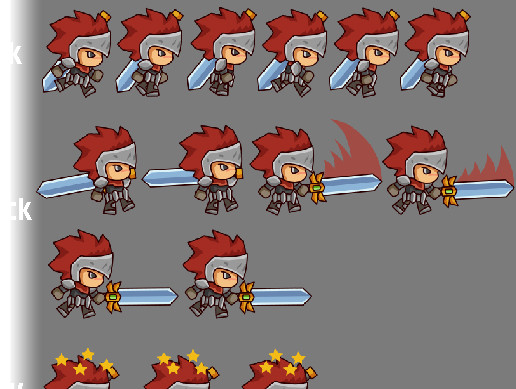
When it comes to sprite animation, developers generally choose between two main methods: traditional frame-by-frame animation and animation using skeletal systems (or similar techniques). Frame-by-frame involves drawing each individual frame of the animation, offering complete control over the final result. This can produce a unique, hand-crafted look, but it’s also incredibly time-consuming.
Skeletal animation, on the other hand, involves creating a 'skeleton' for the sprite and then animating that skeleton. This allows for greater flexibility and reusability. Once a skeleton is rigged, you can easily create different animations by manipulating the bones. However, it can be more difficult to achieve a truly unique aesthetic with skeletal animation.
Which method is better depends on the game type. Frame-by-frame is often preferred for games that prioritize visual style and unique animations, while skeletal animation is well-suited for games with a large number of characters and animations. Increasingly, we're seeing a blend of the two, using skeletal animation for core movements and frame-by-frame for flourishes and special effects. File size and development time are also important considerations.
- Frame-by-frame animation gives you total control and a hand-crafted look, but it takes a long time to produce.
- Skeletal systems are flexible and let you reuse assets, though they can feel a bit stiff or generic if not handled carefully.
Animated vs. Frame-by-Frame Animation: A Comparative Assessment for Mobile Game Development (2026 Trends)
| Feature | Animated | Frame-by-Frame |
|---|---|---|
| Cost | Medium | Medium |
| Time (Development) | Low | High |
| Flexibility (Iteration) | Medium | High |
| File Size | High | Low |
| Artistic Control | Medium | High |
| Complexity (Simple Actions) | Low | Medium |
| Complexity (Detailed Actions) | High | Medium |
Illustrative comparison based on the article research brief. Verify current pricing, limits, and product details in the official docs before relying on it.
Chibi proportions and efficiency
Chibi-style characters – characterized by large heads, small bodies, and simplified features – are becoming increasingly prevalent, particularly in gacha games, casual titles, and mobile RPGs. There's a clear appeal: chibi sprites are undeniably cute and expressive. Their exaggerated proportions lend themselves well to exaggerated animations and humorous interactions.
They’re also relatively easy to animate, which is a significant advantage for mobile developers working with limited resources. The simplified designs require fewer frames and less detail, making the animation process faster and more efficient. This aesthetic creates a sense of charm and approachability that resonates with a broad audience.
I'm not sure if this style will last forever, but it dominates the market right now. Players respond to the look, so expect more chibi characters in 2026. Eventually, the aesthetic might feel overused, so it is worth having a backup plan for your next project's art direction.
Color Palettes & Accessibility
Beyond the overall art style, color choices are absolutely crucial. Current trends favor muted tones, pastel colors, and occasional neon accents. These palettes create a visually appealing aesthetic that is easy on the eyes, particularly important for extended play sessions on mobile devices. However, aesthetic appeal shouldn't come at the expense of accessibility.
Developers have an ethical responsibility to ensure that their games are accessible to players with visual impairments, including color blindness. Using color palettes that are distinguishable for all players is paramount. Tools like color blindness simulators can help developers identify potential issues and make necessary adjustments. Consider using patterns and shapes in addition to color to convey important information.
Avoiding reliance on color alone to indicate critical game elements is a key principle. For example, don't use only red to signify danger; also incorporate a warning symbol or sound effect. Thoughtful color choices are not just about aesthetics; they’re about inclusivity and ensuring that everyone can enjoy the game.
Asset Packs: Standout Sources
Finding high-quality character sprite packs can save developers a significant amount of time and effort. itch.io is an excellent resource, offering a vast selection of both free and paid assets. The platform is known for its indie-friendly community and diverse range of art styles. CraftPix.net is another strong contender, specializing in 2D game assets and offering a wide variety of sprite packs.
A standout pack on itch.io is 'Kenney's Pixel Platformer Kit'. It's a comprehensive collection of sprites, tilesets, and backgrounds in a consistent pixel art style, and it's completely free. While the style is simple, it’s incredibly versatile and can be used as a foundation for a wide range of games. Its strength is its completeness and ease of use.
On CraftPix.net, the 'Fantasy RPG Sprite Pack' is worth considering. It offers a more detailed and polished aesthetic, with a focus on fantasy characters and environments. While it's a paid asset, the quality is high, and the sprites are well-suited for RPGs and adventure games. Its weakness is the higher price point, but the quality justifies it for projects needing that level of detail.
- itch.io: Diverse, indie-friendly, both free and paid assets
- CraftPix.net: Specializes in 2D game assets, high-quality sprites
Sprite Pack Recommendations
- Pixel Art Hero - A comprehensive collection featuring a diverse cast of heroes with multiple animations, ideal for RPGs and platformers. Includes walking, attacking, and idle states.
- Fantasy RPG Tileset & Characters - This pack from CraftPix.net offers a cohesive aesthetic for fantasy-themed games, including character sprites, tiles, and props. Suitable for side-scrolling adventures.
- Sci-Fi Characters Pixel Art - A set of futuristic character sprites designed for science fiction games. Features characters with various weapons and armor, perfect for space adventures or cyberpunk settings.
- Top-Down Medieval Characters - Specifically designed for top-down perspective games, this pack includes a variety of medieval characters such as knights, archers, and peasants, with animations for movement and combat.
- Cute Forest Animals Sprite Pack - Offers charming and detailed sprites of forest animals, suitable for casual games, educational apps, or platformers targeting a younger audience. Includes animations for walking, jumping and interacting.
- 2D Platformer Characters - A versatile pack containing a range of characters designed for 2D platformer games. Includes animations for running, jumping, and attacking, with a focus on smooth and responsive movement.
- Space Shooter Pixel Art Assets - A collection of sprites focused on space combat, featuring spaceships, enemies, and projectiles. Ideal for creating a classic arcade-style space shooter.
No comments yet. Be the first to share your thoughts!