
The Shifting Demand for RPG Sprite Packs: What Developers Want in 2026
The mobile RPG market is competitive, pushing developers toward pre-made character sprite packs to speed up development. The pressure to release games quickly is immense, and creating original sprites takes significant time. This isn't about a lack of artistic talent, but about resource allocation and focusing on core gameplay mechanics.
Budget constraints are also a major factor. Smaller indie teams or solo developers often lack the funds to hire dedicated artists for extended periods. Buying a well-crafted sprite pack lets them achieve a professional look without breaking the bank. This is especially true for developers targeting the growing hypercasual RPG segment, where faster iteration and lower development costs are paramount.
Demand is surging for assets supporting various character classes and customization options. Players expect to personalize their heroes, making sprite packs with diverse equipment, hairstyles, and color palettes highly sought after. AI art generation is gaining traction, but it currently complements existing asset pipelines rather than replacing the need for carefully designed and consistently styled sprite packs.
Mobile gaming's growth is undeniable. Sensor Tower reported mobile game revenue reached $92.2 billion in 2023. High-quality assets, like well-designed character sprites, directly contribute to player engagement and revenue. Developers understand this, driving demand for readily available, professional-grade assets.
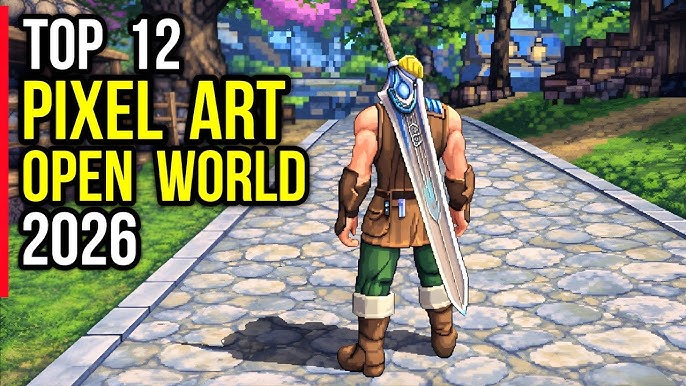
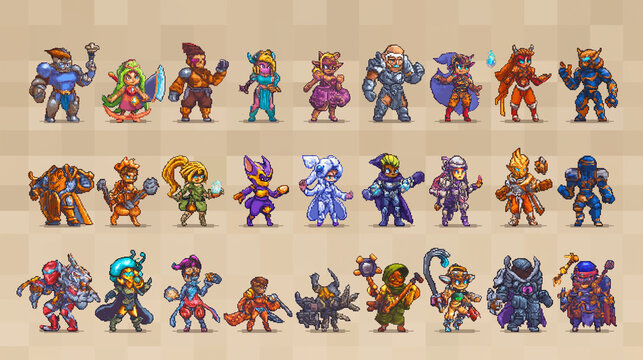
👧🏻👦🏻Characters Pack - 64x64
— Suzana Assets (@suzanaassets) December 30, 2025
Bring your pixel world to life instantly with this diverse character sprite pack!
➡️https://t.co/7xHzvHrwhe#assets #pixelart #2d #assets #itch
Key Sprite Styles Dominating the Mobile RPG Scene
Several sprite styles are popular in the mobile RPG space, each with strengths and weaknesses. Pixel art remains dominant, particularly among developers aiming for a retro aesthetic. Variations exist within pixel art: the classic 16-bit style evokes nostalgia, while 32-bit offers more detail and flexibility.
Isometric pixel art is also gaining traction, providing a pseudo-3D look that adds depth to environments and characters. However, isometric art requires more complex sprite creation and animation, potentially increasing development time. 2.5D sprites, combining 2D sprites with 3D lighting and effects, offer a visually polished experience but can be more resource-intensive on mobile devices.
Chibi-style sprites, with their exaggerated proportions and cuteness, are exceptionally popular in East Asian markets and are increasingly finding a global audience. These sprites are generally easier to animate, making them a good choice for projects with limited animation resources. Their appeal lies in their accessibility and lighthearted aesthetic.
Games targeting a younger audience tend to favor chibi and 2.5D styles, while those aiming for a more mature or classic RPG experience often opt for pixel art. Stardew Valley demonstrated the enduring appeal of 16-bit pixel art, while titles like Genshin Impact (though not strictly 2D) showcase the visual impact of 2.5D-inspired character designs. Determining exact download numbers for each style is difficult, but these examples illustrate their prevalence.
- Pixel Art: Nostalgic, relatively easy to create, can be limiting in detail.
- 2.5D: Visually polished, can be resource-intensive, requires more complex asset creation.
- Chibi: Cute, accessible, generally easier to animate, may not appeal to all audiences.
- Isometric: Adds depth, more complex to create and animate than standard pixel art.
Mobile RPG Sprite Style Examples
- Genshin Impact - Anime/Cel-Shaded.
 Genshin Impact employs a vibrant, cel-shaded style that emphasizes large eyes and flowing hair. This aesthetic directly supports the game’s focus on character collectibility and its anime-inspired world.
 - Guardian Tales - Pixel Art (16-bit).
 Guardian Tales leans heavily into nostalgic 16-bit pixel art. This choice is integral to the game's self-aware humor and its deliberate homage to classic RPGs like *The Legend of Zelda*.
 - Eversoul - Semi-Realistic Anime.
 Eversoul utilizes a detailed, semi-realistic anime style. The sprites feature intricate designs and shading, contributing to the game’s focus on visually appealing character collection and relationship building.
 - Another Eden: The Cat Beyond Time and Space - Detailed Pixel Art.
 Another Eden distinguishes itself with highly detailed pixel art, going beyond typical 16-bit limitations. This style complements the game's epic storyline and focus on a traditional JRPG experience.
 - Dislyte - Modern/Stylized 2D.
 Dislyte uses a modern, stylized 2D art style, blending urban aesthetics with mythological themes. The sprites are dynamic and bold, reflecting the game’s focus on music and contemporary culture.
 - Epic Seven - Highly Detailed 2D Illustration.
 Epic Seven features exceptionally detailed 2D character illustrations that approach a painted aesthetic. This high level of visual fidelity supports the game’s narrative focus and character-driven gameplay.
Essential Sprite Pack Features: Beyond Just 'Looking Good'
A visually appealing sprite isn’t enough. A truly useful character sprite pack needs to be technically sound and offer flexibility. The number of animation frames is critical; more frames generally result in smoother, more natural-looking animations. Packs should include essential animations like idle, walk, run, attack, and damage.
Sprite sheet organization is another key factor. Well-organized sheets with clearly labeled sprites save developers significant time during implementation. File formats should be standard: PNG is generally preferred for its lossless compression and support for transparency, while PSD files allow for further customization if needed. Consistent scaling and resolution across all sprites are essential to avoid visual inconsistencies.
Variations within the pack add significant value. Including different equipment options (swords, shields, armor), facial expressions (happy, sad, angry), and poses (attacking, defending, casting spells) lets developers create more diverse and engaging characters. Packs from Craftpix.net consistently demonstrate this attention to detail.
Licensing is often overlooked but important. Developers need to understand their rights: can they use the sprites in commercial projects? Are there restrictions on modification or redistribution? Clear licensing terms protect both the developer and the asset creator. Always carefully review the license agreement before purchasing any sprite pack.
- Sufficient animation frames for smooth movement.
- Well-organized sprite sheets with clear labeling.
- Standard file formats (PNG, PSD).
- Consistent scaling and resolution.
- Variations in equipment, expressions, and poses.
- Clear and comprehensive licensing terms.
Where to Find High-Quality RPG Sprite Packs: A Marketplace Breakdown
Several online marketplaces cater to game developers seeking mobile game sprites. Itch.io is a popular choice, particularly among indie developers, offering a wide range of assets at varying price points. Its strength lies in its indie-focused community and the direct relationship between creators and buyers, though quality control can be inconsistent.
Craftpix.net differentiates itself with a curated selection of high-quality 2D game assets. They focus on consistency and professionalism, making it a reliable source for developers who prioritize quality over quantity. Their pricing is generally higher than Itch.io, but the assets are often more polished and well-organized.
GraphicRiver (Envato Market) is the largest of the three, offering an enormous selection of assets. This vastness can be both a blessing and a curse: while you’re likely to find what you need, sifting through the sheer volume of options can be time-consuming. Licensing terms can vary significantly between sellers, so careful review is essential.
Itch.io is a good starting point for exploring unique and experimental styles, while Craftpix.net is ideal for projects that demand a consistent, professional aesthetic. GraphicRiver is best suited for developers who need a specific asset quickly and are willing to invest the time to vet the quality and licensing.
Character Sprite Pack Marketplace Comparison - 2026 Outlook
| Marketplace | Price Range | Asset Quality | Licensing Clarity | Indie Focus |
|---|---|---|---|---|
| Itch.io | Varies – Free to Premium | Low to High | Fair | Yes |
| Craftpix.net | Generally Low to Medium Price | Medium to High | Fair | Yes |
| GraphicRiver (Envato Elements) | Subscription or Per-Asset | Medium to High | Poor | No |
| Itch.io | Often Pay-What-You-Want | Low to High | Fair | Yes |
| Craftpix.net | Premium assets available | Medium to High | Fair | Yes |
| GraphicRiver (Envato Elements) | Subscription based access | Medium to High | Poor | No |
Illustrative comparison based on the article research brief. Verify current pricing, limits, and product details in the official docs before relying on it.
Cost Analysis: How Much Should You Budget for Sprites?
The cost of rpg game assets, specifically sprite packs, varies dramatically depending on scope and quality. Pricing models typically fall into three categories: individual sprites (often sold for a few dollars each), small packs (containing a limited number of characters or assets, ranging from $10 to $50), and comprehensive bundles (covering a wide range of characters, animations, and variations, costing upwards of $100).
Using pre-made assets can significantly reduce development costs compared to hiring a freelance artist. A skilled sprite artist can easily charge $30-$60 per hour, and creating a full character sprite sheet with multiple animations can take dozens of hours. Purchasing a well-made sprite pack is often the more cost-effective solution.
I estimate that a typical mobile RPG project can allocate approximately 10-15% of its overall budget to art assets, including sprites, backgrounds, and UI elements. This percentage may be higher for visually-driven games and lower for those that prioritize gameplay over graphics.
Unity Software Inc. Price Prediction 2026
Bull / Base / Bear scenario analysis
| Timeframe | Bull Case | Base Case | Bear Case | Key Driver |
|---|---|---|---|---|
| 1 Month | $26.50 | $24.00 | $20.00 | Mobile gaming asset marketplace expansion and Q4 earnings momentum |
| 3 Months | $30.00 | $26.50 | $18.50 | Unity Asset Store revenue growth from RPG content creators |
| 6 Months | $35.00 | $28.50 | $17.00 | AI-powered sprite generation tools and subscription model optimization |
| 1 Year | $42.00 | $32.00 | $15.50 | Market share gains in mobile game development and asset monetization |
Price Prediction Summary
Unity's price outlook hinges on successful monetization of its asset marketplace and mobile gaming tools. The company's positioning in the growing mobile RPG market and digital asset ecosystem provides upside potential, though competitive pressures and execution risks remain significant downside factors.
Key Factors Affecting Unity Software Inc. Stock Price
- Mobile gaming market growth and RPG genre popularity
- Unity Asset Store revenue expansion and creator economy
- Competition from Epic Games and other game engines
- Subscription model adoption and enterprise client retention
Disclaimer: Predictions are speculative and not financial advice. Stock price predictions are based on current market analysis and may vary significantly due to market volatility, economic conditions, and other unpredictable factors. Always do your own research before making investment decisions.
Integrating Sprite Packs into Popular Game Engines: A Workflow Overview
Integrating gaming assets for sale, like sprite packs, into game engines like Unity and Unreal Engine generally follows a similar workflow. The first step is importing the sprite sheets into the engine. Both Unity and Unreal Engine offer tools for slicing sprite sheets into individual sprites and creating animations.
In Unity, the Sprite Editor allows you to define collision boxes, adjust pivot points, and create animation clips. Unreal Engine utilizes Sprite Editor and Animation Blueprints for similar functionality. Scaling issues are a common challenge – ensure that the sprites are scaled appropriately for the target device’s resolution.
Animation glitches can occur if the sprite sheets are not properly sliced or if the animation frames are not ordered correctly. Careful inspection and testing are crucial to identify and resolve these issues. Both engines provide extensive documentation and tutorials to guide developers through the integration process.
Ultimately, successful integration requires a basic understanding of the engine’s sprite handling capabilities and a willingness to experiment. Refer to the official documentation for Unity (https://docs.unity3d.com/Manual/Sprites.html) and Unreal Engine for detailed instructions and best practices.
Future Trends: AI-Assisted Sprite Creation and Procedural Generation
The future of sprite creation is likely to be shaped by advancements in artificial intelligence. AI-powered tools are already emerging that can generate variations of existing sprites, create new animations based on existing frames, and even design entire sprite packs from scratch. These tools can significantly accelerate the asset creation process and reduce costs.
Procedural sprite generation is another promising trend. This involves creating sprites algorithmically based on predefined parameters. For example, a program could generate different character outfits by randomly combining various clothing items and accessories. This approach offers a high degree of customization and scalability.
However, I don’t believe AI will completely replace human artists anytime soon. AI-generated sprites often lack the artistic nuance and polish of those created by skilled professionals. Instead, AI will likely become a powerful tool that assists artists, automating repetitive tasks and freeing them up to focus on more creative aspects of the process.
The integration of AI and procedural generation could lead to more dynamic and personalized gaming experiences. Imagine a game where characters’ appearances and animations are generated on the fly based on player choices and in-game events. This is a future worth exploring, but it requires careful consideration of artistic direction and quality control.
No comments yet. Be the first to share your thoughts!